
Healing Mindset: Transforming Trauma

Life often surprises us with challenges like breakups and loss, reminding us that our reactions matter most while we can’t control events. Healing is a personal responsibility that requires shifting mindsets and taking ownership of our journey. Trusting in God’s process can lead to restoration and growth, making every step towards healing significant.

Life has a way of surprising us. Just when we think we have everything under control, something happens—a breakup, a loss, a painful experience—that leaves us feeling unsteady. While we can’t control these events, how we respond makes all the difference. “10% of our lives are things that happen to us, and 90% is how we react” is a powerful reminder that we are responsible for our healing and growth.

Healing is Our Responsibility

It’s natural to want to point fingers when life throws us curveballs. I remember a time when I felt deeply hurt by someone I trusted, and for a while, I believed that if they had acted differently, I wouldn’t feel so broken. But eventually, I realized that while they may have caused the initial pain, I was responsible for what happened next.

Blaming others keeps us trapped in a cycle of hurt. When we fixate on what happened to us, we give away our power to heal. Healing, after all, is a personal journey. As much as we’d love for others to fix things for us, the truth is, it’s up to us to move forward.

This is where faith plays a pivotal role. In 1 Peter 5:6-10, we are called to “humble ourselves under God’s mighty hand,” so that in due time, He may lift us. This isn’t about pretending the hurt isn’t there—it’s about acknowledging that while we can’t control everything, God can. It’s about trusting in His timing for our healing. When we humbly place our struggles in His hands, we release the weight of what we cannot change and allow Him to guide us through restoration.

Taking Ownership: Moving Forward Instead of Blaming

The beginning of this season of my life was rough! I had a choice: I could wallow in disappointment or find a new way forward. While the initial pain and hurt weren’t something I could control, my response to it was. Instead of feeling defeated, I chose to develop a deeper relationship with God and pursue other interests, and that decision has brought more fulfilment than I ever imagined.

This experience taught me that clinging to old ways, especially when they don’t yield results, can prevent us from seeing new opportunities. When our current approach to healing—whether it’s avoidance, denial, or resentment—doesn’t work, it’s time to take a new direction.

1 Peter 5:6-10 comes into play here again, reassuring that when we humble ourselves and trust in God’s process, we will eventually be lifted. This idea of “lifting up” isn’t just about relief from pain but about rising to new heights—places we couldn’t have imagined if we stayed stuck in our hurt. The path to healing may require a shift in direction, but that change can lead to greater purpose and growth.

The Power of Perspective: Shifting Negative Mindsets

Have you ever walked into a situation expecting the worst, only to find that things turned out exactly how you imagined? That’s the power of mindset. When we think negatively, we limit our opportunities for growth and healing.

I’ve seen this in my own life. During particularly tough times, I would convince myself that nothing good could come out of the situation. That mindset didn’t just limit my growth—it stopped it altogether. It wasn’t until I shifted my perspective, choosing to see setbacks as opportunities for learning and growth, that I began to heal.

In the same way, we can approach trauma and pain with a mindset of defeat or with a mindset of resilience. The Bible reminds us that “after you have suffered a little while, God will restore, confirm, strengthen, and establish you” (1 Peter 5:10). This verse holds a vital key to perspective—yes, suffering is part of the journey, but it is not the end. There is a promise of restoration if we are willing to trust in the process, and that promise can be our motivation to keep moving forward.

From Trauma to Triumph: Healing is a Choice

Trauma is not something we choose, but how we move forward from it is. According to Trauma is Not Your Fault, trauma often happens through no fault of our own. However, while trauma itself is beyond our control, healing from it is a conscious decision we must make.

I remember talking with someone who had experienced significant trauma in their life. They were angry, hurt, and, for a while, stuck in the belief that nothing would ever change. They believed their trauma defined them, and as a result, their life remained in a cycle of pain. But once they chose to seek help and shift their perspective, their healing journey began. It wasn’t instant, but they reclaimed their life by taking responsibility for their healing.

This process echoes the idea that while trauma is an unavoidable chapter in our lives, it doesn’t have to be the entire story. Healing is not easy—it often requires therapy, support from others, and deep self-reflection. But as we work through it, we begin to rebuild our lives, with trauma becoming a part of our past, not our future.

Action Steps: Embracing Change and Growth

So, how can we begin the process of healing and growth? Here are a few practical steps to help guide the journey:

  • Take ownership of your healing-Reflect on how you might be holding yourself back. Is there a part of you still waiting for someone else to make things right? Consider journaling about what healing looks like for you, and list a few small actions you can take to reclaim control of your life.
  • Change your mindset– Identify negative thoughts that may keep you stuck. One way to do this is through a simple exercise: replace every negative thought that enters your mind with a positive truth. For example, instead of thinking, “This situation is hopeless,” remind yourself, “There is always potential for growth, even in difficult circumstances.”
  • Seek guidance– Healing is not a journey you have to walk alone. Whether through prayer, counselling, or a trusted friend, having someone to talk to can make a difference. Speaking with a mentor helped me see my struggles in a new light, often pointing out strengths I didn’t realize I had.
  • Embrace discomfort– Growth rarely happens in comfort zones. Sometimes, the most remarkable healing comes when we allow ourselves to sit with uncomfortable emotions and trust that they are part of the process. Consider trying new activities like mindfulness meditation or taking up a physical exercise that challenges you—it’s a great way to build resilience and strengthen both body and mind.
  • Celebrate small wins– Healing is a journey; every step forward deserves recognition. Make a habit of acknowledging small victories, whether it’s a breakthrough in therapy, a shift in mindset, or simply a day where you feel lighter. These wins remind you that progress is possible, even when the road is long.

You Hold the Key to Your Healing

Life will always present us with challenges, but our true power lies in how we react. Healing doesn’t happen overnight, but every step we take toward taking ownership of our lives brings us closer to wholeness.

What’s your next step in healing? What’s one thing you can do today to reclaim control over your story? I invite you to share your experiences or insights in the comments—whether you’re just beginning your healing journey or are further along, your story might inspire someone else to take that next step toward wholeness.

“Owning our story can be hard, but not nearly as difficult as spending our lives running from it.” -Brene Brown

Until next time,
Abby


Make Prayer Your Daily Steering Wheel

I recently went to see The Forge and boy, was it good! The movie hit home for me in many ways, especially because it touched on much of what I’ve written about here on the blog. But there was one line that really stood out and lingered with me long after the credits rolled.

One of the characters said:

“We can’t treat prayer like some spare tire that you only pull out in an emergency. No. Prayer has to be more like the steering wheel that you hold tightly every day no matter where you’re going.”

What a powerful metaphor, right? It got me thinking about how often we’re all guilty of this—only turning to God when things go wrong when we’re desperate for a way out. But how different would our lives look if we held onto prayer like a steering wheel—something we rely on daily to guide us through every situation?

Prayer: Not a Last Resort, but a Daily Guide

We’ve all been there. A crisis hits—financial trouble, a relationship breakdown, or perhaps a health scare—and we’re praying fervently, asking God for help. In those moments of desperation, we treat prayer like a lifeline, an SOS call to heaven. And, of course, God hears us. But what happens when the storm passes? Do we keep praying? Often, we don’t.

This is where the metaphor of the steering wheel comes in. Prayer isn’t just for the tough times—it’s meant to guide us daily through calm and stormy weather. Think about how a steering wheel operates. You don’t just grab it when you’re headed for a crash; you hold it tightly the entire journey, constantly adjusting your course, even if the road seems straight. Prayer should be the same. It should guide our decisions, help us navigate life’s challenges, and even keep us grounded when everything seems to go our way.

A Personal Journey: Learning to Pray Daily

Let me share a bit of my own story here. There was a time when I only prayed during difficult moments. If things were going smoothly, I would get caught up in the busyness of life and forget to thank God for all the good in my world. It wasn’t intentional, but looking back, it’s clear that I treated prayer like that spare tyre—something I pulled out when the wheels were falling off, but not something I relied on daily.

Everything changed during a particularly challenging season. I was facing a lot of uncertainty—transitioning out of the Army, trying to figure out the next steps in my career, and dealing with personal struggles all at once. It felt like everything was unravelling, and I prayed more than I ever had. But this time, something clicked. Instead of just using prayer to ask for help, I began using it to stay connected to God.

I started praying not just for solutions but also for guidance, clarity, and even the strength to face whatever was ahead. Over time, I noticed a shift in how I approached life’s challenges. I wasn’t just waiting for things to get tough to turn to God; I was walking with Him through every step. Prayer has become my steering wheel, and life has been beautiful since, despite the challenges.

Biblical Examples: Consistency in Prayer

The Bible is filled with examples of people who used prayer as their guiding force, not just in moments of crisis but throughout their daily lives. One of the most powerful examples comes from Daniel. He prayed consistently, even when it put his life in danger. Daniel didn’t just pray when he was about to be thrown into the lion’s den—he prayed three times a day, every day (Daniel 6:10). His relationship with God wasn’t just about asking for deliverance in an emergency; it was about maintaining that connection day in and day out.

Another great example is Jesus Himself. Despite the demands of His ministry, He regularly withdrew to quiet places to pray (Luke 5:16). Even though He was the Son of God, Jesus demonstrated the importance of consistent communication with the Father. If He needed that daily connection, how much more do we?

Practical Tips: Making Prayer Your Steering Wheel

So, how do we move from treating prayer as an emergency response to making it our steering wheel? Here are a few practical tips that have helped me:

  • Set Aside Daily Time: Consistency is key. Carve out time to pray every day, whether first thing in the morning, during your lunch break, or right before bed. It doesn’t have to be a long or complicated prayer. The important thing is to make it a habit.
  • Be Honest and Authentic: Sometimes, we don’t need the “perfect” words when praying. But God wants us to be real with Him. Whether you’re feeling joyful, anxious, or frustrated, bring those feelings to Him in prayer.
  • Pray for Guidance, Not Just Solutions: It’s easy to pray when we need something, but shift your focus toward asking for guidance and wisdom. This way, you invite God to walk you through every decision, not just when you need a way out.
  • Gratitude is a Form of Prayer: Don’t forget to acknowledge God when things are going well. Thank Him for the little and big things in your life. Gratitude keeps us humble and reminds us that every good thing comes from Him (James 1:17).

Final Thoughts: Keep Holding On

It’s easy to let prayer slip into the background when life is going smoothly, but the truth is, we need it just as much during the calm as we do during the storm. Think of prayer as your steering wheel, something you hold onto no matter where life takes you. When you make that shift, you’ll find yourself more grounded, connected, and prepared for whatever comes your way.

I’d love to hear your thoughts on this! Have you ever found yourself treating prayer like a spare tyre? How do you stay consistent in your prayer life? Let’s discuss this in the comments below.

Until next time,
Abby

Finding Purpose in Being a Beacon of Light

I always felt inherently different, like a calling woven into my being. Surrendering my pain and anger to God brought me back to who I am—a loving person made to reflect His light. Despite hardships, I refuse to be changed for the worse. I choose to forgive and be a light in the world.

I have always felt that God created me differently. We all hold that belief about ourselves, sensing something unique and extraordinary within us. But for me, it’s always felt so much more profound, almost like a calling that’s woven into the fabric of my being. I can’t fully articulate what I mean. Still, those who truly know me understand that this feeling goes beyond mere individuality—it’s an intrinsic part of my soul, something that has shaped my entire existence.

Recently, a friend asked me a question that made me reflect deeply. I answered without hesitation because I’ve become clear about who I am and what I stand for.


I do not wish harm on those who have hurt me. If we spend our lives waiting for others to suffer as we have, we only trap ourselves in an endless cycle of bitterness and pain. I’m not saying that the initial feelings of hurt and betrayal aren’t real; they are intense and, at times, all-consuming. They make us vulnerable to the devil’s whispers, tempting us to hold onto anger and seek revenge. For a while, I was lost in that darkness. I allowed those feelings to cloud my heart and mind and pull me away from the person I knew God created me to be.

But then, I chose to surrender it all to God. I laid my pain, anger, and confusion at His feet, and in return, He welcomed me back home with open arms. He reminded me of who I am—a wholesome, loving person who was made to reflect His light, not to be consumed by the shadows of this world.

I struggled with why bad things happen to good people for a long time. It’s a natural question, especially when you’ve poured kindness, grace, and love into someone only to be met with betrayal or cruelty. It’s easy to feel disillusioned, to ask, “Why me?” But I’ve realised that life isn’t always so black and white. It doesn’t matter if you’re good or bad; doing good does not make you immune to the hardships of this world. We live in a world that is broken and sinful, a world where everyone, in some way or another, will feel the sting of wrongdoing or the touch of evil. Yet, despite this reality, I refuse to let the actions of others change me for the worse. I will continue to be who I am, who God made me to be.

I will not allow what I’ve been through to harden my heart or make me cynical. Instead, I choose to keep praying for those who have hurt me. This is no easy task—it requires immense strength and humility, but I believe it is the right path. Who am I to judge, after all? I am far from perfect, and as much as I wish to think otherwise, I know I have been the antagonist in someone else’s story. I have been the villain, the one who caused pain or misunderstanding. Maybe that’s true for all of us in some way. But there is freedom in letting go, choosing peace over resentment, finding comfort in God’s love rather than human approval.

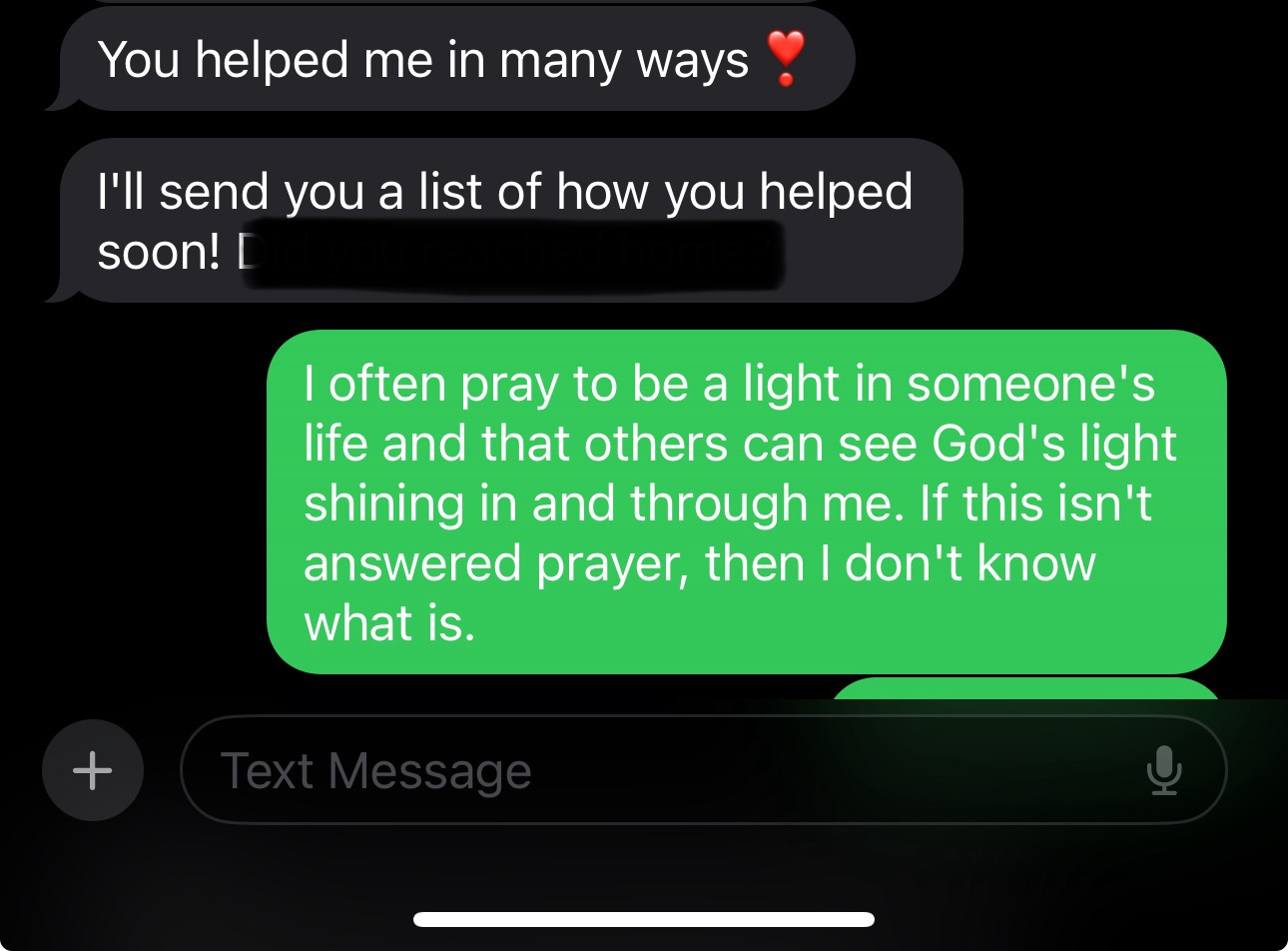
The other night, I stumbled upon a video that felt like a mirror to my soul. It explained who I am at my core in a way that resonated deeply with me. I realised that I don’t often give myself enough credit for the person I’ve become. So today, I will, not out of arrogance or pride but out of a genuine understanding and acceptance of myself and my impact on others. I frequently pray to be a light in someone’s life, to let God’s light shine through me in every encounter. Everything I do is done without ulterior motives, driven purely by the desire to reflect His love. The sincerity and purity of my heart are not of my own making but a testament to God’s work within me.

I know that embracing this truth is not about being perfect; it’s about recognising the unique role God has given me and stepping into it with confidence and humility. It’s about understanding that my journey, with all its ups and downs, has a purpose beyond what I can see. I was made to be different, love deeply, forgive freely, and be a beacon of light in a world that often feels so dark. And for that, I am deeply grateful.

So, I invite you to reflect on your journey. Is there someone you need to forgive or a part of yourself to reclaim? How can you be a light in someone else’s life today? Share your thoughts or experiences in the comments—I’d love to hear how you’re navigating these challenges uniquely.

Until next time,
Abby

https://www.tiktok.com/t/ZP8JkC4QF/

Feedback from friends.

There is no Growth in Comfortability

Comfort restricts growth, while discomfort drives adaptation and growth. Overcoming fear and resistance through persistence is key. Practical tips include starting small, setting challenging goals, embracing failure, and seeking support.

The phrase “There is no growth in comfortability” speaks to the idea that personal and professional development often requires stepping out of our comfort zones. In this context, comfortability represents a state where things are predictable, safe, and routine—where challenges are minimal and risks are few. While this state of comfort can be appealing, it can also lead to stagnation. Comfort is confining. Comfort breeds complacency. Conversely, growth is about pushing boundaries, embracing discomfort, and facing the unknown.

“Growth and comfort do not coexist.” – Ginni Rometty

The Nature of Growth: Stepping Beyond the Familiar

Growth requires moving beyond what is familiar and comfortable. The comfort zone is a psychological state where a person feels at ease, in control, and free from stress or anxiety. It’s where routines and habits dominate, and risks are minimized. While this zone provides security and predictability, it also limits growth. Our experiences, skills, and perspectives remain stagnant when we stay within this zone. Growth demands we step outside this safe space into the unknown, where challenges and new experiences await.

Growth is fundamentally about change, and change rarely happens when we do the same things in the same ways. When we venture beyond what is familiar, we encounter new situations that require us to adapt, learn, and develop new skills. This process of adaptation is where growth happens. It might be uncomfortable, but it’s also where we discover our true potential.

For example, consider someone used to working in a specific role and excels in it. While they may continue to perform well, their growth plateaus because they are not challenged. By taking on a new project, learning a new skill, or moving to a different role, they face new challenges that force them to think differently, solve problems creatively, and build resilience—confronting the unfamiliar drives personal and professional development.

Discomfort as a Catalyst for Success

Discomfort acts as a catalyst for growth. When we are uncomfortable, our instincts push us to adapt. This adaptation might involve learning new skills, altering our mindset, or finding new ways to cope with challenges. Discomfort forces us to confront our limitations and pushes us to surpass them. In this way, discomfort is not just a byproduct of growth; it’s a necessary component.

Think of it like physical exercise. When you start a new workout routine, your muscles ache, and you feel tired—this is discomfort. However, this discomfort leads to stronger muscles and better fitness. Similarly, in life, the pain we feel when trying something new or difficult is what strengthens our character and capabilities. It’s that feeling we get when challenged by people closest to us.

Overcoming Fear and Resistance: The Power of Persistence

Fear and resistance are natural human responses to change, uncertainty, and potential failure. Fear often arises when faced with the unknown or when we perceive a threat to our well-being, whether physical, emotional, or social. Resistance, on the other hand, is the internal force that pushes back against change. The voice in our head says, “Stay where you are; it’s safer here.”

Fear and resistance are powerful because they tap into our instinctual desire for survival and security. They keep us within our comfort zones, where we feel controlled and protected. However, these forces also prevent us from taking risks, trying new things, and growing.

Persistence is the quality that enables us to continue pursuing our goals despite fear and resistance. It is the steady, determined effort to overcome obstacles and keep moving forward, even when the path is difficult, or the outcome is uncertain. Persistence is crucial because it helps us break through the barriers that fear and resistance create.

When we persist in the face of fear, we gradually diminish its power over us. Each time we take a step forward, we build courage and resilience despite our fears. Over time, what once seemed terrifying becomes manageable, and eventually, it may even become a source of strength.

Persistence also helps us overcome resistance by reinforcing our commitment to our goals. Resistance often manifests as procrastination, self-doubt, or excuses. By persistently taking action, even in small ways, we chip away at this resistance, proving that we are capable of more than we initially believed.

Consider the story of Noah from the Bible, who God instructed to build an ark to save his family and a remnant of all living creatures from the impending flood. At the time, Noah faced ridicule and disbelief from those around him. There was no visible sign of the flood, and building such a massive vessel on dry land seemed absurd to others. Noah followed God’s instructions despite the lack of evidence and constant criticism. His persistence was not based on what was immediately visible or logical to the world but on faith and obedience.

Noah’s unwavering commitment and determination in the face of opposition illustrate the power of persistence. Noah continued to build the ark, trusting that his efforts would ultimately fulfil a greater purpose. Success and fulfilment often come not from talent or immediate results but from the determination to keep going, even when the path is challenging, and the rewards are not yet visible.

Practical Tips for Embracing Discomfort and Achieving Growth

1. Start Small-Begin by stepping out of your comfort zone in small ways. Whether public speaking or learning a new skill, start small to build confidence.

2. Set Challenging Goals-Setting challenging, slightly out-of-reach goals pushes you to grow. Break these goals into smaller, manageable tasks.

3. Embrace Failure- Reframe failure as a learning opportunity. Keep a journal to track lessons learned from each failure, turning setbacks into growth.

4. Surround Yourself with Support- Find mentors or peers who encourage growth and provide support during uncomfortable times.

“Life begins at the end of your comfort zone.” – Neale Donald Walsch

Reflect on Growth

Reflect on an area of your life where fear or resistance is holding you back. Consider how you can apply the power of persistence, whether it’s a personal goal, a challenging project, or a problematic relationship. Take a step today—no matter how small—toward overcoming those fears. Commit to pressing on, even when the journey gets tough, and trust that your persistence will lead to growth and success. Write down one action you can take this week to move beyond your comfort zone and start making progress toward your goals.

Every day is a new opportunity to improve our lives. Don’t shy away from discomfort; embrace it.

Until next time,
Abby

Meeting the Right Person at the Wrong Time

Encountering impactful individuals can significantly influence our lives, especially in the context of “right person, wrong time.” Mental and emotional readiness dramatically affects our ability to embrace these relationships. My experiences taught me the value of openness, honest communication, and seeking support. Embracing vulnerability and new experiences can lead to deeper connections and personal growth.

There comes a point in our lives when we encounter people who leave a remarkable and lasting impact on us and how we navigate life after meeting them. I have always been skeptical of the “right person, wrong time” concept. To me, it didn’t make sense. Sometimes, we do not understand a concept until we have experienced it ourselves. Only then do we truly grasp the reality of what others have been repeating time and time again.

Right person, wrong time. How is this possible? It is all circumstantial. Where we are in our lives determines whether or not we can fully accept someone else in our everyday lives. For each person, these circumstances are different. However, the situation that tops all others is one’s mental and emotional capabilities. When we come across someone at a time when we feel completely broken and lost, we might not be able to see the goodness in them and the value they can bring to our lives. We are so blinded by our pain and all that we have been through. So much so that we push those who mean us well away. We see ourselves as failures, so we cannot realize that we deserve good things and good people. Only when we have destroyed relationships with people and isolated ourselves from everyone can we truly begin to see how amazingly perfect someone could have been for us.

I believe that nothing happens before its time and that everything does happen for a reason. We can constantly worry about what could and should have been, but it all boils down to the greater good. You see, I am guilty of pushing people away. My ability to detach is scary. I did not realize that there would come a day when I would not understand these new emotions that presented themselves from wanting to push someone away. Someone I had grown to care for in a relatively short time. In so doing, I underwent a period of introspection. I then understood that healing does not have to be a solo journey. Some parts of ourselves require us to heal with the help of others.

When that person arrived in my life, and now that I think about it, it was the wrong time for both of us. I firmly believed that they were the right one. I was not ready to receive them. I was in a constant battle with myself. Walk away or stay. The pain I felt from thinking about cutting ties was enough for me to throw caution to the wind and go for a ride- and boy, was it a ride and stories for another time. I laid my cards on the table and bared it all. It was one of the best decisions I have ever made, and I have no regrets. That decision made me feel lighter, freer, alive, and genuinely happy for the first time in years. I could have missed out on all this and more had I stuck to my old ways. Unbeknownst to them, this individual forced me to work on myself and my struggles. Although the outcome was not what I expected, I am happy I took the chance because I would have missed out on something so magical and beautiful that I know only an author as creative as God could have written. I would not change a thing if I could.

If you find yourself in a similar situation, here are a few tips that might help:

  1. Be Open to New Experiences: Sometimes, stepping out of your comfort zone can lead to the most rewarding experiences. Do not let fear hold you back from forming meaningful connections.
  2. Communicate Honestly: Share your feelings and fears with the other person. Honest communication can build stronger bonds and help both parties understand each other better. During my introspection, I learned that bottling emotions only leads to misunderstandings and missed opportunities.
  3. Seek Support: Whether from friends, family, or a professional, seeking support can help you navigate your emotions and gain a clearer perspective.
  4. Embrace Vulnerability: It is okay to be vulnerable. Being open and vulnerable can lead to deeper connections and personal growth.
  5. Reflect and Learn: Take time to reflect on your experiences. What have you learned about yourself? How can you use these lessons to grow and improve your relationships?

Our encounters with people who leave a lasting impact on our lives can profoundly shape our journey, especially when we consider the notion of the “right person, wrong time.” Through personal experiences, we understand that our mental and emotional readiness significantly influences how we receive and nurture these relationships. My journey taught me the value of openness, honest communication, and seeking support when needed. These interactions often push us towards introspection and growth, revealing that healing does not always have to be a solitary endeavour.

By sharing these experiences and offering practical advice, I hope to inspire others to embrace their emotional journeys with courage and vulnerability. Life is full of unexpected twists, and we often find the most profound lessons in these moments of connection and self-discovery. Remember, every experience—whether it seems like the right or wrong time—contributes to our personal development. Embrace the journey, trust in the process, and believe that each step leads you to where you are meant to be.

As you reflect on your journey, consider this: How might embracing vulnerability and openness to new experiences transform your relationships and personal growth?

Until next time,
Abby